
“Every day is different.”
For owners of event spaces, concert venues, gyms, community centers, and other similar venues, the fact that no two days are ever the same is part of the appeal of running the business. Facility managers know that is also one of the difficult things about operating those types of venues.
There can be an efficiency born out of repetition. If there are 20 people working in a space everyday then heating, lighting, ventilation, and other systems can be managed to match the predictability of the workday. But venues that might be virtually empty for two days only to host a concert with 1,000 people on the third day need more flexible system control. And for that control to be efficient and effective it needs to span everything from how systems are controlled to where they are controlled from.
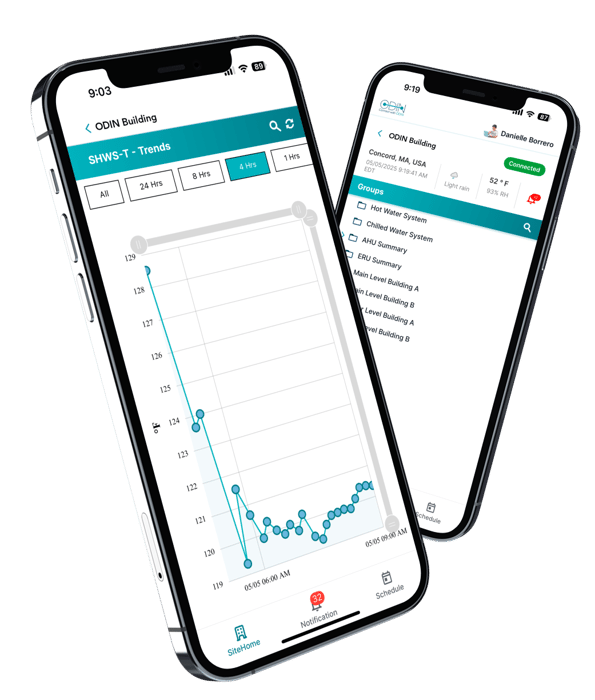
Make Connections With a Mobile Facilities App
The connectivity and insight that is derived from a mobile facilities app is unlike anything provided by traditional BMS on-site access points. The limited visibility and static access point terminal-based BMS systems do offer insights but the action you take is reactive vs the proactive potential of a mobile app.
Let’s look at what some of those benefits are.
The Benefits of Remote Access
The benefits of operating smart building platforms with mobile app control can be found in three key categories.
1. System Benefits
When mechanical systems are tied into a BMS mobile app issues can be discovered, and repaired, faster. This means less stress on the entire system and more efficient operational capacity. In larger event spaces, this stress can be generated by fluctuating occupancy levels and the unique needs of the different groups that fill the space night after night.
For example, if sensors aren’t accurately reading air flow, ventilation fans may not operate effectively. Among other things, this could lead to:
- Unnecessary machine wear
- Inefficient operation by the rest of the system
- Improper indoor air quality (IAQ) levels
And remote access can improve all of these areas without the need to replace existing systems. That’s because a facility management mobile app should complement systems as it works to keep them connected back to the building, no matter what the distance between them.
2. Schedule benefits
Running a building’s systems through a mobile application decentralizes a number of processes. This enables all key members of a building’s support team - owners, managers, contractors, maintenance - to have the same information at the same time. That means that if an error alarm is tripped work can begin on it right away. It’s a far cry from the old system where all system sensors fed data to a central terminal that was reviewed by a single individual who had to recognize an issue and then call in the right team members to care for it.
With a mobile facilities app that data, and the response to it, moves faster. This can lead to more agile responses from key team members and less system downtime. It is particularly important when you are tracking data across multiple locations because now you can do that without having to physically be in each space.
3. Operational benefits
Being on site 24/7/365 isn’t really an option, unless you’re using a facilities management mobile app. Then you can be on site all day everyday. Virtually. As occupancy levels ebb and flow you can monitor and manage system performance from anywhere through the app.
It isn’t just alarms you’ll be looking for. You can also track energy usage, system efficiency, operational peaks, and other key data points so that when a tenant has a question, or members of the maintenance team need system performance details, you‘ll have them ready just as soon as you enter your lockscreen code.
One study found that this type of control enab;ed companies to see a 10-25% reduction in their energy waste.
Facilities Management Mobile Apps From ODIN
The ODIN BACNET building automation system simplifies building management and systems operations. In a business where you never truly know what the day will bring you need access to all of your data, in real time, so you can make critical adjustments to match the comfort and needs of your occupants with the operational constraints of your systems.
To discover the benefits ODIN’s remote building automation system platform can bring to your venue, schedule a demo today.